

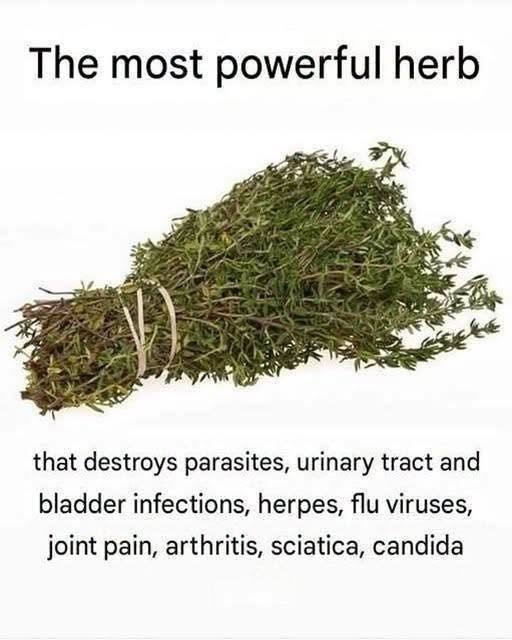
“The Most Potent Herb That Destroys Parasites and Supports Urinary Tract Health: The Power of Oregano Oil”
needs some adjustment for scientific accuracy and website safety.
1. The image may not be oregano
The herb shown in the image looks more like thyme than oregano. If you're writing about oregano oil, it's better to use an authentic image of oregano.
2. “Destroys parasites” is too strong
Oregano oil contains compounds such as carvacrol and thymol, and laboratory research has shown antimicrobial and antiparasitic activity. However, this does not prove that oregano oil can treat or eliminate parasites in humans.
Similarly, claims such as:
“cures urinary tract infections”
“treats herpes”
“kills flu viruses”
“cures arthritis”
“treats sciatica”
“eliminates Candida”
would be too strong without specific clinical evidence in humans.
Better title options
Option 1 — Safe and professional:
Oregano Oil: Potential Benefits, Uses, and What the Science Says
Option 2 — SEO-friendly:
Oregano Oil Benefits: What Research Says About Its Antimicrobial Properties
Option 3 — More engaging:
Oregano Oil: Exploring Its Potential Benefits for Immune and Digestive Health
If this is for your website, I would avoid the original “The Most Potent Herb That Destroys Parasites…” wording because it presents medical claims as established facts.