
Hibiscus tea has not been proven to cause cancer. Learn about its benefits, risks, and when to take it with caution.
Hibiscus tea and cancer: the viral claim worth reviewing
Posts circulating on social media claim that "consuming hibiscus tea is causing cancer." This statement is alarming because it generates fear surrounding a beverage that is very popular in Latin America, the Caribbean, Africa, and other regions.
However, that claim is not supported by solid scientific evidence. Hibiscus flower tea, prepared with the calyces of Hibiscus sabdariffa , has not been shown to cause cancer in humans.
That doesn't mean it should be taken without restraint or that it's suitable for everyone. As with many plants, it can have effects on the body, interact with medications, and cause problems if consumed in excess or in concentrated extracts.
What is hibiscus flower?
The hibiscus flower, also known as Jamaica flower, roselle, or Hibiscus sabdariffa , is used to prepare a red, tart, and refreshing infusion. It can be enjoyed hot or cold, with lemon, ice, or mild spices.
Its red color comes from plant compounds such as anthocyanins and other polyphenols. These substances are studied for their antioxidant activity, although that doesn't mean the drink cures diseases.
Hibiscus has also been investigated for its potential effect on blood pressure. Some studies suggest it may help to moderately lower blood pressure in certain individuals, but it should not replace medical treatment for hypertension.
Does hibiscus tea cause cancer?
So far, there is no reliable evidence that hibiscus flower tea causes cancer when consumed as a normal infusion in moderate amounts.
In fact, much research on Hibiscus sabdariffa has focused on its antioxidant compounds and potential effects on blood pressure, lipids, and inflammation. Some laboratory studies have explored activity against cancer cells, but that doesn't mean the tea cures cancer or works as a treatment.
The viral claim often mixes fear with a lack of context. It's one thing to say that more studies are needed on high doses, extracts, and long-term safety. It's quite another to claim that drinking hibiscus tea "causes cancer."
What should be taken into account
Although the beverage has not been proven to cause cancer, there are real precautions. Safety depends on the amount, frequency, the person's health, and whether it is taken in the form of tea, capsules, or concentrated extracts.
A recent review on the safety of Hibiscus sabdariffa found that extracts may have a favorable profile within certain ranges, but also noted that there is insufficient evidence on long-term consumption and that possible drug interactions should be considered.
This is important because many people drink herbal teas as if they couldn't have any side effects. But "natural" doesn't always mean risk-free.
Risk associated with low blood pressure or medications
Hibiscus flower may affect blood pressure. For some people with high blood pressure, this may seem appealing, but for those already taking antihypertensive medication or with low blood pressure, it may increase the risk of dizziness, weakness, or drops in blood pressure.
WebMD advises that people with high or low blood pressure, diabetes, liver or kidney problems should talk to a health professional before using Hibiscus sabdariffa .
Potential interactions with antihypertensive, lipid-lowering, and other medications have also been studied. A review of herb-drug interactions noted that concurrent use with medications may predispose to drug interactions.
Pregnancy and breastfeeding: best avoided without medical guidance
During pregnancy and breastfeeding, extra caution should be exercised with herbal teas and medicinal plants. Not all of them have been sufficiently studied in humans.
WebMD notes that it is not known for certain how Hibiscus sabdariffa may affect pregnancy or the fetus, and that data in animals suggest possible harm, including risk of miscarriage.
A review on safety during pregnancy and breastfeeding also concluded that caution should be exercised with Hibiscus sabdariffa until more human research is available.
Therefore, if a woman is pregnant, trying to conceive, or breastfeeding, it is wise to consult a doctor before consuming hibiscus tea frequently.
Can it affect the liver or kidneys?
Drinking an occasional herbal infusion is not the same as consuming concentrated extracts every day. The risks often increase when using high doses, unregulated products, or combinations with other supplements.
The 2026 review on the safety of Hibiscus sabdariffa indicated that there is concern about preclinical studies related to the liver, kidneys, and male reproductive organs when evaluating doses or prolonged periods.
This doesn't mean that a glass of hibiscus tea will damage your organs. It means that it shouldn't be used excessively or as a medicinal supplement without professional guidance, especially by people with liver or kidney disease.
Real benefits of hibiscus tea
Hibiscus tea can be a beneficial beverage if consumed unsweetened or with minimal sugar. It's refreshing, caffeine-free, and can be a great alternative to soda, sugary juices, or other processed drinks.
It also provides antioxidant plant compounds. However, antioxidants are not a magic bullet against disease. Their benefit depends on overall diet, rest, physical activity, and medical supervision.
If someone drinks hibiscus tea with a lot of sugar, syrups, or condensed milk, the beverage loses much of its beneficial properties. The best version is simple: hibiscus flowers, water, ice, and, if desired, a small squeeze of lemon.
How to prepare hibiscus tea easily
Ingredients:
1 tablespoon dried hibiscus flowers,
2 cups water,
Lemon (optional),
Ice (optional)
Preparation:
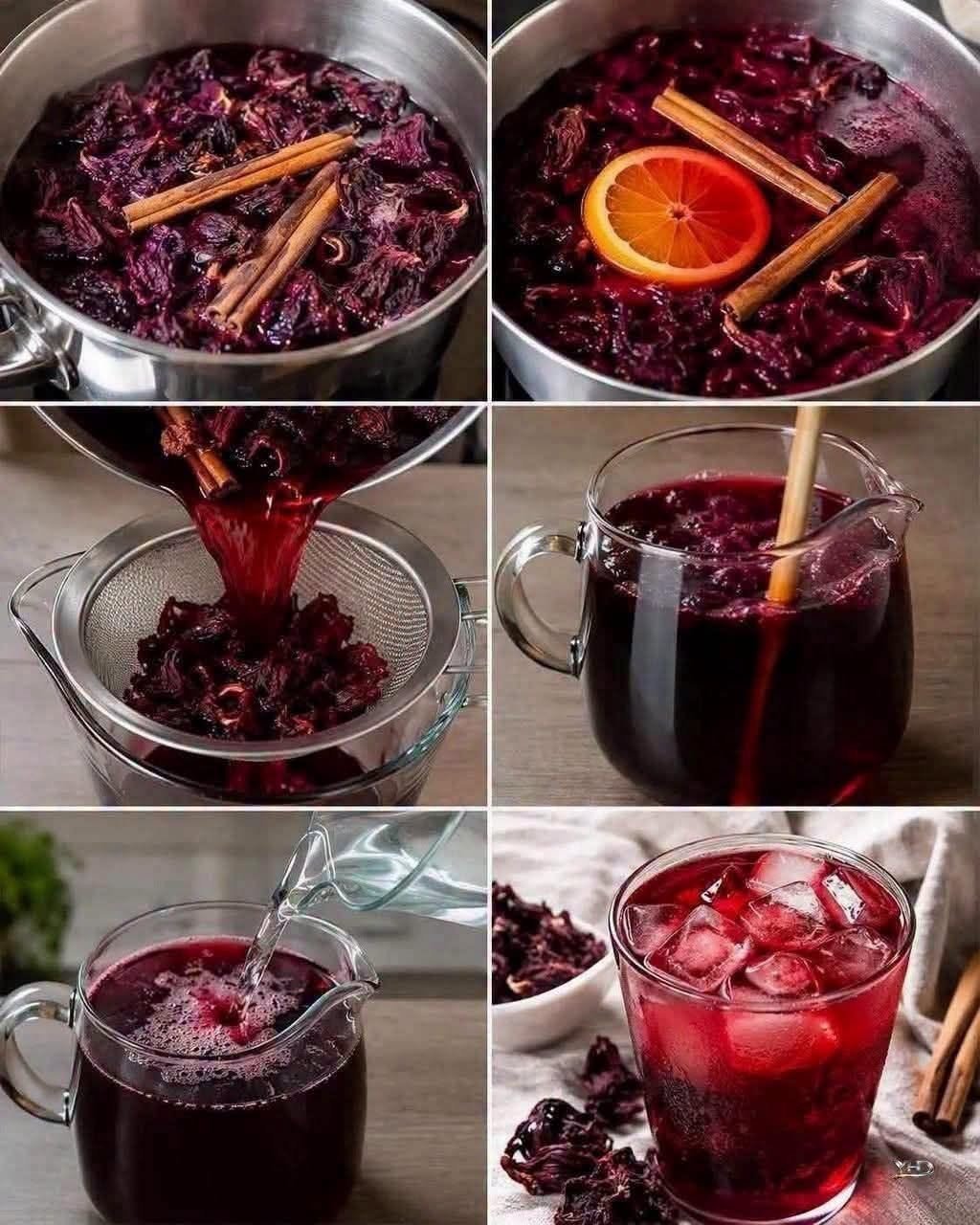
Boil the water and turn off the heat.
Add the hibiscus flower and let it sit for 5 to 10 minutes.
Strain the drink.
Drink it hot or let it cool with ice.
Avoid boiling the flower for too long, as this can concentrate the acidic and bitter flavor. You also don't need to drink liters of it daily. One or two occasional cups are sufficient to enjoy it as a beverage.
Common mistakes when consuming hibiscus flowers
The first mistake is using it as a "treatment" to lower blood pressure, blood sugar, cholesterol, or prevent cancer. No herbal infusion should replace medication.
The second mistake is drinking it in large quantities every day without knowing how it affects blood pressure.
The third mistake is consuming concentrated extracts because “if it’s stronger, it works better.” In reality, higher concentration can mean more risk.
The fourth mistake is over-sweetening it. Many commercial or homemade hibiscus teas have so much sugar that they end up resembling a soft drink more than a healthy infusion.
Who should consult before taking it
Pregnant women, breastfeeding mothers, people with low blood pressure, medicated hypertension, kidney disease, liver disease, diabetes, or those using anticoagulants, antihypertensives, cholesterol medications, or undergoing cancer treatments should consult with a health professional.
People with cancer or undergoing cancer treatment should be especially careful with herbal supplements. Memorial Sloan Kettering Cancer Center reminds us that herbs, vitamins, and supplements can interact with cancer medications and don't always work as advertised.
The recommendation is not to be afraid, but to inform the doctor about everything you consume.
What to do if you saw a viral alert
Before sharing a post that says hibiscus flower causes cancer, check if it cites human studies, medical institutions, or official sources.
Be wary of incomplete phrases like "it's causing trouble..." or "see comments". That format is usually aimed at getting clicks, not explaining evidence.
Also check if the content confuses traditional tea with concentrated extracts, supplements, or laboratory studies. They are not the same.
Conclusion
There is no solid evidence that hibiscus tea causes cancer when consumed as a normal infusion in moderate amounts. The viral claim exaggerates and can generate unnecessary fear.
What does exist are real precautions: pregnancy, breastfeeding, low blood pressure, medications, liver or kidney disease, and use of concentrated extracts.
Hibiscus flowers can be part of a healthy diet if consumed in moderation and without excessive sugar. However, they do not cure diseases, prevent cancer on their own, and should not replace medical treatment.